Choose your language:  English
  Español
  Francais
  Italiano
  German
Playa Turchese Residence Newsletter #12 – Playa Turchese Residence V3.0 in progress…
Hello, I hope you’re doing well.
Settle in, make sure you’ve got plenty of time, grab your favorite drink 🍹 —and maybe some popcorn 🍿— because there’s a lot to read!
Take your time and read carefully: every detail matters!
Full Update on the Current Situation
As promised — far too long ago — here is the long-awaited detailed newsletter explaining what has been done, why and how it was done, and what remains to be accomplished.
But before anything else, it’s important to keep the following key points in mind:
No Technical Documentation Available
There are no available plans or diagrams for:
- the electrical installations,
- the water systems,
- internet connections,
- TV services,
- septic tanks,
- the gas network,
- nor any of the privately added installations (antennas, gas water heaters, etc.).
All of these systems were added over time, without structure or proper documentation.
As a result, cables and pipes run in all directions — often poorly installed, sometimes even across façades — which creates risks of water infiltration and makes any kind of diagnostic work extremely complex. Not to mention the safety hazards this entails.
A Real Electrical Mess
Take the lighting, for example:
Over the years, different solutions were added (ground lights, globe lamps, spotlights, etc.), but older systems were never properly removed or disconnected.
This leads to risks, unnecessary load, and avoidable energy consumption.
We’ve started cleaning this up, but there’s still more to do.
When you dismantle a system, it has to be fully dismantled — not just unscrewing a lightbulb…
A Pragmatic and Transparent Approach
Faced with this situation, we carried out a thorough on-site investigation, although it wasn’t always possible to clearly identify the use or ownership of certain installations.
So, the decision was made to start from scratch, using quality surface-mounted cables and pipes, in order to:
- avoid excavation (which would be costly and destructive), which would have caused other problems and much more work time.
- make future maintenance much easier,
- quickly identify any breakdown or leak.
My Role and My Limits
Let me remind you that I’m neither a plumber, nor an electrician, nor a technician, nor a gardener (But I love helping in all areas and learning every day.) — just a fellow owner who accepted (because there was no other candidate) to take on the management of the residence following the resignation of the previous administration.
I receive a modest salary of RD$50,000 (approximately USD 825 / EUR 700) and I’ve been working an average of 7 days a week, 10 hours a day, by day and night, rain or shine, since October 1st.
Every intervention requires me to take risks, because waiting for full consensus on every issue causes serious delays. The pool renovation is a perfect example: it took us 6 months to choose between just two contractors!
The Pool Renovation: A Revealing Precedent
Despite:
- the difficulties in reaching an agreement,
- 4 floods that delayed the work,
- hidden defects in the original structure,
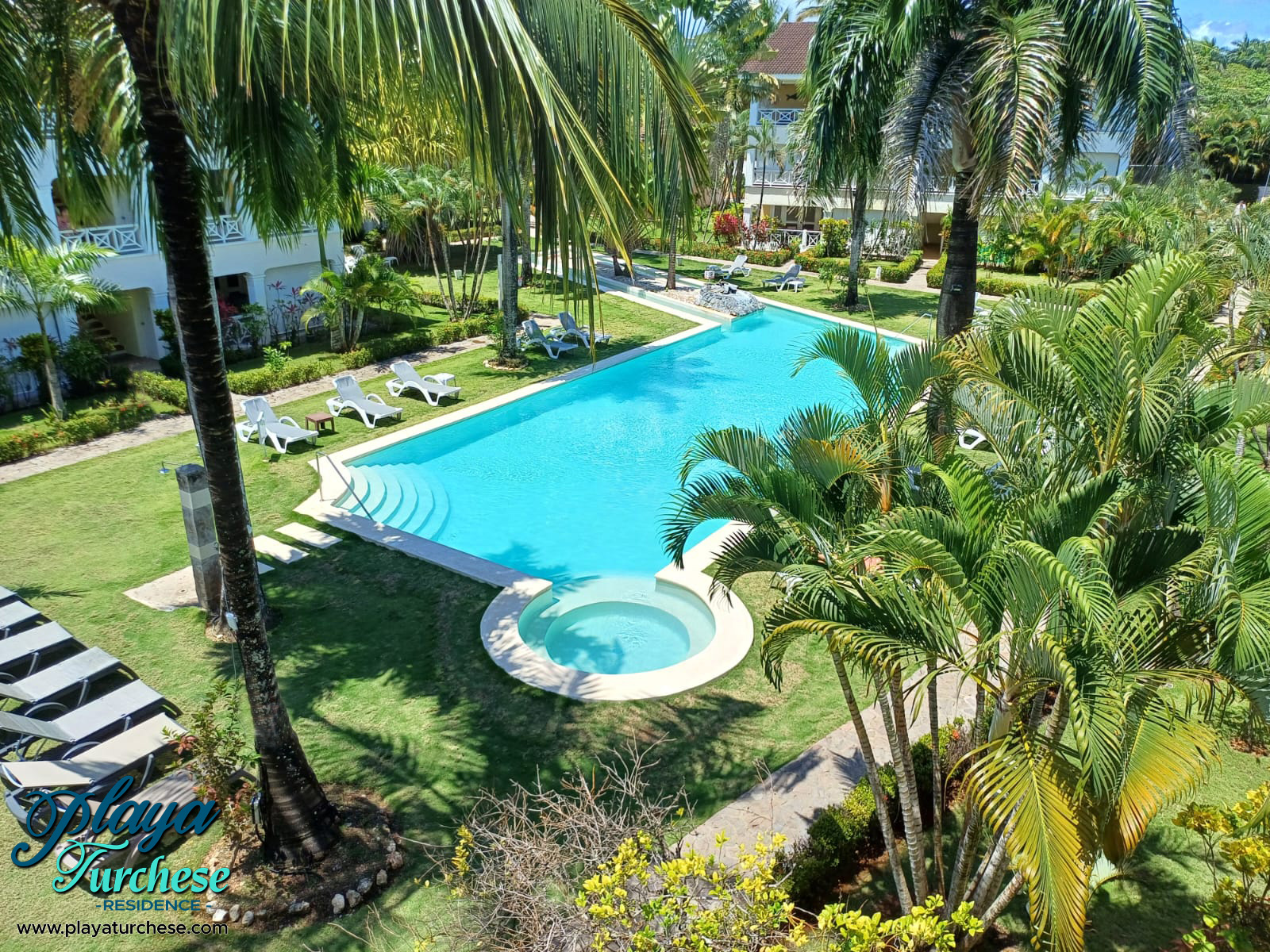
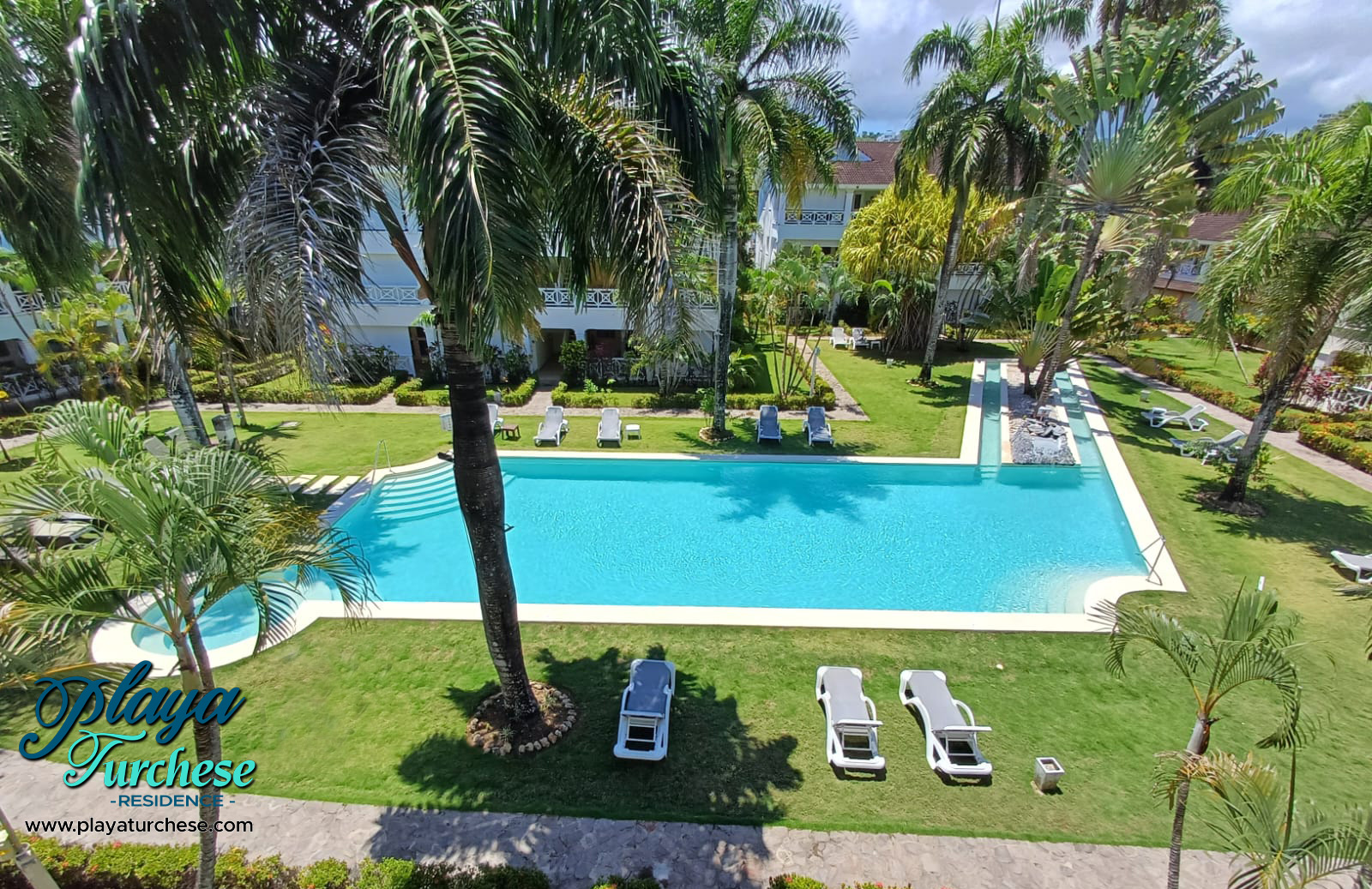
We managed to finish the project before the high season — which was crucial for rentals and the residence’s image.
The result has been praised by both residents and tourists. Some regulars even told me they had never seen the residence look so lively and beautiful, with up to 150 people present at once!
But the most common complaint remained:
The catastrophic quality of the water in the apartments.
A well-known issue that had never been resolved, despite heavy investments in the past. It was time to take comprehensive, long-term action.
Choosing the Contractor: Thomas Aul
How I met him
It all started with a clogged sink. After getting expensive and risky proposals from several plumbers, I was advised to contact Thomas Aul — a German known in the area (strongly recommended — despite his profile — by the only reliable septic tank specialist in Las Terrenas, who has emptied our tanks several times).
From his first intervention, he quickly and inexpensively resolved a problem others wanted to fix by breaking through the foundations…
His approach immediately won me over:
- He understands systems,
- Offers creative and effective solutions,
- Has real experience (20 years running a company, managing maintenance for a 200-unit residence in Germany),
- Owns high-quality tools and equipment,
- And holds a recognized degree in his field.
A Unique Character
Thomas is a complex individual:
- Very nervous, talkative, energetic (he drinks more than 2 liters of energy drinks a day…),
- Probably bipolar, with autistic traits (He clearly told me that he had mental problems),
- Deeply committed and passionate, he works tirelessly, day and night, even in the rain,
- Occasionally reacts excessively (outbursts, sudden and strange behaviors…), sometimes childishly — but he knows what he’s doing.
- Intelligent and well-read, he loves animals (he owns two cats).
I had to be extremely diplomatic and patient to keep him on the job. Twice, he almost walked away impulsively. But each time, I managed to talk him down — and thank goodness: no one else could have taken over this complex system without starting from scratch.
I’ve also felt like getting rid of him more than once… In short: an intense working relationship.
Just to clarify, contrary to what some may think:
He is not my friend or anything of the sort. I’ve never spent time with him outside of this project.
Fair Pricing
Normally, Thomas charges upwards of RD$750/hour, sometimes much more depending on the conditions and type of work.
I negotiated a flat rate of RD$550/hour (about USD 9 / EUR 7.70), regardless of the task — which is a very good deal.
I kept track of his hours and paid him weekly, in addition to covering material costs.
What Others Say
Several owners have hired him for work in their own units, with varying feedback.
You can speak with Rosa or Mikey (just click on the name) — they’ll share the details and confirm what an intense experience it can be…
Conclusion of This Introduction
Thomas has been both the brain and the hands behind the complete reorganization of our water and electricity systems — which I will now explain step by step in the following sections.
Please! Be sure to watch the videos of the residency made on October 1st when I start to be administrator so that you can really compare the differences:
👉🏼
Ed #1 https://www.youtube.com/watch?v=w8LMo442EvY
Ed #2 https://www.youtube.com/watch?v=d25CXuoEGAg
Ed #3 https://www.youtube.com/watch?v=5Fd9pSL4N40
Ed #4 https://www.youtube.com/watch?v=ToclC8RerMs
Ed #5 https://www.youtube.com/watch?v=L7Yypt7mi0g
Ed #6 https://www.youtube.com/watch?v=2poyOkEqLig
Ed #7 https://www.youtube.com/watch?v=HfcooCVCaG4
Las Villas https://www.youtube.com/watch?v=LNCnW08V454
Local Tecnico https://www.youtube.com/watch?v=MgCIk38s8j0
Office https://www.youtube.com/watch?v=gR0rG_oKFdw
Motos Parking Lot https://www.youtube.com/watch?v=zhk04lHAcyc
Residence Limits https://www.youtube.com/watch?v=ChgGvOOWzx4
Temporal fix after the fire: https://www.youtube.com/watch?v=QzwOAMB6BVA
ELECTRICITY
Complete Renovation of the Electrical System – Following the Fire
As a reminder, the risk of fire had already been mentioned in the notice for the last general meeting. Due to time constraints, this issue was not fully addressed back then. (Point 20-J)
Methodology and Constraints
Whether for the electrical or water systems, each intervention had to be adapted based on:
- the areas involved,
- the time slots permitted for noise,
- and the need to minimize service interruptions.
That’s also why some steps were postponed until the residence was less occupied, in order to minimize disruption for residents.
Some may have been surprised to see work started but not completed. It is important not to judge a project based on a single photo or video. The work must be assessed as a whole, and within its operational context.
Work Completed and Network Status
The previous electrical installation was particularly complex, disorganized, and included cables whose purpose and layout were largely unknown. It has now been deactivated as much as possible and is being replaced with a new, higher-quality system.
Unlike the water system, old and new electrical wiring can temporarily coexist, allowing for a gradual renovation. A large part of the network has already been modernized, but some work remains:
- Protecting exposed cables,
- Improving the aesthetic of certain areas,
- Finishing the replacement of old cables still in use.
Upgrades and Installed Equipment
- Separate circuits have been installed for services connected or not connected to the generator;
- The residence lighting now works via a light sensor, enabling more efficient energy use and reducing the need for manual adjustments;
- A new electrical cabinet, waterproof and fire-resistant, has been installed. A document outlining its functions and layout will be posted inside the cabinet door for authorized individuals to quickly identify controls.

Origin of the Project: Fire – Emergency Response and Electrical Restructuring
On the evening of the fire, around 9 PM, it became absolutely necessary to act the very next morning to restore a basic electrical system—as quickly and simply as possible.
Fortunately, Adrien (whom many of you know) was present that night and arrived very early the next morning. He immediately offered to help, and in the urgency and stress of the situation, I told him:
“Do whatever it takes to get the essential services back up. We’ll deal with a full reorganization afterward.”
Emergency Work: Adrien and Angel
Adrien called Angel, electrician many of you probably know. Together, they worked with what was available, using:
- only the necessary materials, which they invoiced me for,
- and their labor over almost three days, for a total of around 30,000 pesos.
The system was restored—temporarily, but it was functional.
However, Adrien warned me right away:
- the generator could not safely run in that condition,
- several electrical cables were damaged,
- and new issues could quickly arise.
Damage Assessment and Search for Solutions
We had to take a step back to assess the extent of the damage. I brought in several electricians. The results:
- Estimates were highly inconsistent, sometimes vague;
- Quotes lacked detail, as a full analysis of the entire residence would have taken hours or even days.
In short, I didn’t feel confident.
Until Thomas told me:
“I can take care of this too—except for the generator, that’s not my area. But I can recommend someone specialized.”
What We Discovered Next
We later realized that Adrien and Angel had connected everything directly, with no regulation system in place.
Direct consequence:
- Excessive electricity use
- And a massive spike in the utility bill
I’ll share with you the invoices before the fire, immediately after, and the most recent ones, so you can clearly see the evolution—and understand the value of the in-depth work that followed.
Smart Investment and Early Results
This project should not be seen as a simple emergency fix, but rather as a thoughtful reconstruction aimed at:
- Stabilizing our electrical system over the long term,
- Reducing consumption,
- And preventing future incidents.
The benefits are already visible in recent electricity bills—and this is just the beginning.
Here is the consumption of the main meter of the residence in kW over the past several months. We can clearly see the spike just after the fire and the obvious drop since the start of the overall circuit optimization. We can do even better!

RD$15 per KW.
For full details, visit this website: Luz Y Fuerza
Contract number: 1007055
Password: 25486T
Map of the new circuit : (in progress)

THE ELECTRIC GENERATOR
Relocation and Upgrading of the Generator
The generator has been moved outside the technical room, as it was not at all appropriate to have electrical connections, gasoline, and water filters all in the same space. Besides taking up considerable room, the noise echoed heavily inside.
It is now installed outdoors, behind the laundry room, elevated and sheltered under a roof to protect it from water infiltration. It rests on vibration-absorbing springs, and an exhaust muffler has been added to further reduce noise. Two soundproof polystyrene panels may still be added on either side to further improve noise comfort.
Technical Improvements
A battery maintenance box, generously donated by Sylvie and Daniel (7D), is now connected to a new battery. This battery is placed outside the generator to prevent damage when the generator runs for several hours.
The automatic transfer system is currently disabled. The last specialist consulted (a German – Heiko -, known to some residents) confirmed that the previous setup — involving complex and costly relays — was not suited for this type of generator.
He recommended a specific, simple, and effective control box designed for this model. Unfortunately, it is rare and very expensive locally (around USD 400 with a 15-day wait). After extensive searching, I was able to find a similar model abroad for USD 56. It will arrive in the coming days. See the product here.
This box is straightforward and offers several functions: three buttons – Start, Stop, and Automatic. Surprisingly (and unfortunately), none of the many previous electricians ever mentioned it.
Maintenance and Upkeep
The original starter motor has been replaced: its poor-quality teeth had worn down, often preventing the generator from starting. I found a used model with metal teeth, which are much more durable. The result: the generator now starts instantly.
Since it hasn’t been used much in the past, the diesel engine is now showing signs of wear: a white, foul-smelling smoke is released at startup, disturbing some residents depending on the wind direction.
I plan to:
- Monitor the smoke, which likely results from condensation in the fuel tank, causing moisture buildup,
- Call in a mechanic if needed for engine inspection and maintenance,
- Extend the exhaust pipe so the smoke is released higher up and causes less inconvenience.
See the video: (first 3.24 min.)
WATER
Renovation of the Water Distribution System
This is the most important and also one of the most delicate chapters of this letter. Unlike the electrical system, it was not possible to combine the new installations with the old ones.
For years, the poor water quality had been an issue, despite previous efforts. This caused constant inconvenience: contamination, difficulty washing clothes, damaged toilets, and health risks. The old underground water network in the residence had several leaks, worsened by natural wear and the seismic tremors we’ve experienced.
After an analysis, we observed excessive water consumption even when all buildings were shut off. This indicated significant leaks, far beyond a few open taps in apartments. To compensate for the loss, we relied heavily on well water, which was often contaminated. This placed unnecessary strain on the pump and increased electricity consumption.
It was difficult to pinpoint the exact location of the leaks, as the water runs underground and sometimes stagnates far from the actual break. A full investigation and a redesigned system map would have taken a lot of time and money, likely requiring a massive replacement of the pipes and turning the residence upside down. We therefore opted for the quickest, most economical and effective solution: to create a new external network.
This required a large amount of material: pipes, connectors, filters, cement, as well as cleaning and restoring the pumps and tanks.
When there’s a leak, there’s loss and contamination. Filtering the water is not enough if the pipes themselves are polluted with soil. The solution was to install an entirely new line. Since it was impossible to connect the new system to the old pipes, we created a new main circuit with temporary connections to each building in order to quickly activate the new system for everyone.
You may have seen photos or videos showing meters with a simple pipe and an outdoor shut-off valve—this is a temporary but effective solution. We reused the old individual connections, though many of them were badly damaged, rusted, or overgrown with vegetation. These taps are often in poor condition and could break at any moment. They must be replaced entirely by rebuilding each valve register..
Fixing them one by one is no longer sufficient. With the allocated budget, we must move forward by replacing them register by register. Currently, only the two registers at Building 2 were renovated by Thomas, and 3 more by Rafael—just 5 out of 16.
The taps at the garden-side entrances of the buildings are not yet connected. This work has been postponed due to budget constraints.
Today, everyone is satisfied: the water is finally clean, clear, and the pressure is good.
We also studied how the INAPA water supply reaches the residence. Without a precise map, we followed the main pipe from the technical room to the parking area, where we decided not to dig any further.
See the explanation here:
To compensate for the small diameter of the supply pipe, we installed a special pump that increases the flow rate, allowing the tank to fill more quickly. For weeks now, the distribution system has been running exclusively on INAPA water.
The water passes through a filter before reaching the apartments. We could still improve the filtration using spare filters we have in stock, but the current system is very satisfactory.
Regarding pressure, we reused two small pressure tanks strategically placed behind Buildings 1 and 7 to maintain stable pressure throughout the residence.
We also restored the well pump after cleaning and maintenance. This water is directed through an innovative circuit, inspired by a proven method, designed to reduce odors and gases (such as methane).
I invite you to ask Google or ChatGPT the following question:
How do I get rid of methane odors in water collected from a well?
The water goes through several stages: an initial aeration fountain behind Building 2, a large unused reservoir (Tenako), then through a pool filter adapted for the “backwash” process to avoid water stagnation (the same filter we mistakenly purchased before the pool renovation and had not been using). Then, it is aerated a second time in another fountain before passing through a charcoal container, which improves the water quality and finally flows into the tank.
See the video:
Starting here:
And continu here:
(For your information, it is not a headset that I wear around my neck but a portable air conditioner.)
We added filter cartridges in transparent, easy-to-monitor and reusable housings, which will reduce costs compared to previous practices… RD$1,000 per cartridge! We used to change them frequently because they would blacken almost immediately.
Note: Chlorine should not be used in the tanks, as it damages internal apartment connections. We used to use a lot of chlorine in an attempt to improve the well water quality. (Another area of savings.)
This summary covers the key elements of the new installations. The connections of the garden-side taps at the building entrances still need to be completed. Some underground tunnels have already been made to facilitate the passage of pipes.
The most complex task is reconnecting these pipes to the existing taps, which are embedded in concrete—this promises to be very difficult work. Maybe an opportunity to present the taps in a different way… Any suggestions?
Another important point is to automate the pump and tank management system. Currently, I manually check the water level several times a day, which is quite demanding. We need to install float valves and detectors to automatically stop pumping when the tank is full, and restart it when necessary—always giving priority to INAPA water but also managing the well pump accordingly.
This automation system is neither complex nor very expensive, and it would be best for Thomas, who knows the system perfectly, to handle it.
Finally, each resident must monitor the condition of the installations inside their apartment: clean and inspect faucets, connections, and fix any leaks. Regular checks will prevent major damage, especially for those who do not occupy their apartment year-round. As I label the taps, I make sure that outdoor taps in unoccupied apartments are shut off.
To conclude, I’m proud of the work achieved, even if there’s still more to do. The hardest part is behind us, and step by step, the residence will have a fully renovated, reliable, and efficient water system.
A quick note about Thomas, who has to go to the capital due to a serious eye health issue. It’s important not to rely on a single person: we must plan for backup workers to ensure continued maintenance of the system.
Thank you all for your patience and trust during this long-awaited renovation. Let’s keep monitoring, maintaining, and improving this essential system—together.
Map of the new circuit (in progress)

For your information, in case of emergency it is now possible to empty the pool into the cistern.
FYI. Before the renovations, the cistern emptied overnight! Currently, I have to close the Inapa inlet valve, otherwise the cistern will overflow! If I don’t open it, the cistern drops ~20% in 24 hours!
This is clear proof that we were flooding ourselves!
Enjoy it… but let’s avoid waste 😉
Here is an example of the result in my apartment, you should all have the same thing, if not, inspect your internal installations.
GAS
Since we don’t have much data on past years’ consumption, it’s difficult to identify any major fluctuations over time, especially as seasonal changes greatly influence gas use. However, during renovations in certain areas of the residence, we discovered several gas leaks—not major ones, but real nonetheless. These leaks, found in various places around the residence and potentially in some apartments, required immediate intervention upon detection.
This is why, in the breakdown of expenses related to the two ongoing projects, there are isolated actions related to gas, even though they don’t directly concern water or electricity. For example, during recent work, three leaks were repaired, and more recently, a leak was found behind Building 4 during a video inspection. I asked Thomas to step in quickly, and his intervention, billed at 10,000 pesos, seemed entirely reasonable to me—see the photo of the result. Of course, improvements can always be made by spending more, but this work was essential and sufficient.
One important point is that the gas meters have been dismantled. Some are out of order, others still work, but many are rusted and in poor condition. An interesting idea for future renovation would be to reinstall a general gas meter at the distribution outlet of each building.
This would allow us to monitor the building’s overall consumption and detect leaks more easily: if the meter shows usage while none of the apartments are using gas, we’d immediately know there’s a leak somewhere. Then it would simply be a matter of turning off the gas apartment by apartment to quickly pinpoint the leaking unit.
This improvement—what I call the “version 2” of the gas network renovation—is neither complicated nor very expensive to implement. It requires a bit more labor, but would allow better monitoring and greater safety, especially considering the current state of the meters, many of which are defective or rusted, increasing the risk of leaks. We already have the meters for this.
This renovation was done for one building, but should be replicated for the other six buildings as well as the villas.
This project will need careful planning and budgeting. The last intervention cost 10,000 pesos all-inclusive. I believe adding a meter should not dramatically increase the bill. I estimate we could renovate at least two buildings per day.
Before:

See the result for the building #4:

SEPTIC TANKS
A key technical point: the access hatches to the septic tanks should be raised to prevent garden or floodwater from infiltrating them. While, on paper, a tank that “absorbs” stagnant garden water might seem practical (since it dries out the garden faster), it quickly becomes problematic when water backs up into toilets, showers, or sinks in the ground-floor apartments.
I’ve also considered another solution: installing a backflow valve with an elbow joint on the drainage pipes from the buildings to the tanks. This would allow wastewater to exit normally, but prevent it from flowing back into the apartments during flooding. The risk here is that if the tank is full or the system is saturated, the valve could block even the wastewater from exiting the apartments—what we wanted to evacuate could then come back in. This is a sensitive matter that should be discussed with specialists. Last time, the tanks overflowed…
Another difficulty is the unequal distribution of buildings across different tanks. Some tanks receive more wastewater than others, and it’s sometimes hard to know exactly where everything flows. We also need to make sure all tanks are properly connected to the intended treatment system.
Observations on existing tanks:
- Tank between Buildings 1 and 2: Already emptied, but still cluttered with debris (wood, stones, etc.) from previous work. The current pump is not at the right height, preventing full use of the tank’s capacity. It needs a thorough cleaning and the pump must be re-evaluated.
- Tank near the villas: Likely in a similar state. It was sealed due to poorly fitted hatches, which led to an infestation of insects (cockroaches, mosquitoes, etc.). It should be rehabilitated and properly sealed. Today, we spend a lot on fumigation chemicals when it would be better to solve the root cause by sealing the tanks. Perhaps we could add chlorine inside to minimize the spread of mosquitoes and cockroaches.
- Tank behind Building 5: In generally good condition and functioning properly. Needs to be raised.
- Tank behind Building 7: This is likely a drainage register more than a proper tank, but it has been in critical condition for a long time. Covered with a simple tarp, the setup is makeshift and ineffective. This area needs a complete overhaul: clean it out, remove old debris, raise the level, and build a custom lid. Thomas mentioned an easy, fast, and affordable solution to fix this zone.

Finally, a grease trap connected to the tank of Building 7 is also starting to cause problems. Complaints are beginning to emerge, confirming the urgency to address this area as a priority.
Four new-generation grease traps have been installed:
- 2 behind Building 1
- 1 behind Building 2
- 1 next to Building 5
WASTE MANAGEMENT
Waste Management – Service Improvements and Cost Savings
For several months now, we’ve changed service providers for waste collection. The previous one was unreliable and even damaged a wall while maneuvering their truck.
I billed him for the renovation of the right wall and the complete painting of the room. I took the opportunity to replace the old, rotten wooden door with a metal one on which I put instructions.

We now work with a new provider—a man and his son—who use a clean and well-maintained truck. They ensure daily collection (7 days a week) and always leave the area clean afterward.
Cost comparison:
| Service | Previous Provider | New Provider |
|---|---|---|
| Household Waste | 10,000 pesos/month | 4,000 pesos/month |
| Garden Waste | 2,000 pesos/month | 2,000 pesos/month |
| Monthly Total | 12,000 pesos | 6,000 pesos |
| Annual Savings | – | 72,000 pesos |
Thanks to this change, we receive better service at half the cost, saving 72,000 pesos per year, which is directly reinvested into the residence’s budget.
INSURANCE
Regarding the flooding and fire incidents, I gathered insurance experts at the residence. They took extensive notes and photographs, and I sent them invoices and supporting documents provided by affected owners.
For the floods, I received a summary of the compensation evaluation, which I share here. However, I was informed that since the claim was made after the maintenance work was billed, we are not eligible for compensation. Moreover, some of the damaged items were not listed in the property inventory, which was never updated.
Once again, insurance companies are showing bad faith by making the process overly complicated and burdensome.
Bruno Polini contacted me to offer his assistance as an insurance advisor, especially for the fire-related claims. He doesn’t charge for his services, and I continue to handle the insurance payments directly.
I asked him to provide a status report before the next general meeting is called so we can discuss it together. I hope to receive this report in time.
I don’t have much hope for a favorable outcome in terms of compensation.
I’ve checked the law—if the constitution states that insurance is mandatory, then we must have it. If not, we could reconsider the expense or may need to amend the constitution to do so. If anyone among us is a legal expert, we’re all ears.
LAUNDRY ROOM
The topic of the laundry room often comes up in our discussions. Some of you are even calling for its complete closure, mainly for two reasons:
- The contract is no longer valid: It dates back to 2018, renews automatically every three years, but was signed with a company that no longer exists. ERRATUM : Mr. Massimo Ghillani contacted me and provided me with documents proving that SAMM SRL is still in operation but is now called Antillas Life Style SRL. See the document
- Services are not being delivered: Especially, stair cleaning is sometimes skipped or poorly done.
- It is used for washing for apartments in Corte del Mar and Aligio, as well as for customers outside of these residences.
So, if the contract is void and no longer applicable, we’re faced with two major options:
- Permanent closure of the laundry room and redefining the use of the space.
- New contract, to be defined together under our own conditions.
It’s important that everyone thinks about these options ahead of the next meeting to avoid long debates during the session. The goal will simply be to decide between:
- Closing the laundry room.
- Drafting a new contract.
- No opinion / Abstention.
Repairs and Current Status
Several interventions have already been made:
The laundry room’s toilet and shower have been shut off, as they were discharging wastewater directly into the well instead of a septic tank 😱. This posed a clear health risk that we’ve suffered from for a long time.
Testimonies also indicate that some apartments in Building 3 may be doing the same—discharging directly into the well—despite a septic tank being nearby. A thorough inspection will be necessary to ensure we’re not polluting our own water supply.
Electricity and Water
The laundry room pays for its own electricity via its own meter.
However, the new pumps (main and secondary), which now supply the laundry room from a single cistern, are powered by the general electrical network. Their consumption is not billed to the laundry room.
Wastewater Drainage
A plastic tank has been installed to collect wastewater from the washing machines. Previously, it was discharged haphazardly.

This tank is connected to a septic tank and includes a submersible pump that activates automatically when the water level is high.
In Conclusion
The laundry room is a space that belongs to the residence, and we are therefore responsible for its upkeep. But given the contract situation, current practices, and recent upgrades, it’s time to make a clear decision.
MAIN ENTRANCE DOOR

Tokens
Many residents have asked me for additional tokens — some due to loss, others because of damaged tokens or technical issues.
Anticipating this, I had already ordered 100 from Amazon, at a much better price than those previously bought in the capital, via a technician or from FIGITECH (whose prices were even higher).
These new black tokens, more robust and reliable, are working perfectly.

Towards more responsible management
We now need to collectively decide on the following principle:
Should each resident contribute financially to the replacement of their token?
In itself, it’s not a large amount: about 25 to 30 pesos each. But if everyone starts treating them as free consumables, we risk a surge in requests.
I don’t have the time or the desire to manage the token accounting for everyone.
One solution could be to create a small dedicated fund, but that would add more management.
What do you think? What are the options?
- Free
- Free up to a certain number? If so, how many?
- Paid? At what price? How would the fund be used? To buy more tokens?
Help me prepare the agenda questions for the next meeting.
Code and token or token only: a debate to settle?
This question — and especially the decision made — stirred up strong emotions after the last meeting.
Given the low participation in that vote and the reactions afterward, it’s useful to put it back on the agenda, hoping for broader input this time.
And just to be clear: if you don’t vote, you don’t get to complain about the outcome.
If your choice doesn’t win, the decision must still be respected.
Special case: people living alone
I also understand the concerns of those living alone.
If they find themselves locked out without a token or code, they may be stuck — especially if there’s no staff at the entrance, no doorman, and the gardener or administrator (who aren’t supposed to play that role) are absent.
Same goes for someone waiting for a doctor or technician and unable to open the gate.
This must be taken into account in our decisions — but without dragging out the discussion.
In fact, there will be no discussion: the same options as last time will be proposed.
Decision to be made in 5 minutes
I therefore propose that this point be included in the agenda of the next meeting. The decision must be made quickly, with no debate: we vote, period.
Votes cast by proxy cannot take into account new information shared during the meeting.
That’s why, for topics like this, it’s best to make your decision ahead of time.
Otherwise, it will be postponed to a future meeting.
But let’s remember: the goal of a meeting is not to spend hours debating, but to vote.
To do that, the questions and options must be clear. Feel free to suggest any — we won’t be holding meetings every month.
SECURITY
Security remains an important topic, and unfortunately, a source of many complications.
Rate increase
After the last meeting, based on last year’s rates, we had a nasty surprise: a 20% increase in hourly security rates.
We went from 100 to 120 pesos per hour — a significant unplanned expense.
New incident + perimeter reinforcement
Following yet another theft committed by the same individual — arrested but likely already released — we took the following measures:
- Installed mesh fencing and barbed wire around the laundry area, his usual escape route.
- Cleared away the soil piles against the perimeter wall (with a backhoe), which had been used for easy access.
Since then, no new intrusions have been reported. But…
Staffing problem
I’ve too often found guards asleep on the job — this is unacceptable.
It’s not my role to supervise those who are supposed to be watching over us.

So I met with the head of the security team, and we decided to implement an hourly rotation system:
- The person in the office (watching the cameras) and the one in the parking lot will switch places every hour.
- Each will do a full round of the property on a different route.
Objective: avoid boredom, keep alert, and ensure true active surveillance.
Monitoring the patrols
To improve oversight:
- I had suggested an app (60 USD/year) based on scanning QR codes at specific times and locations. See the video here
- Francis proposed a similar system using physical checkpoints activated with a token. A computer then generates a report confirming whether all checkpoints were scanned at the right times.
This type of system also allows us to challenge hours billed — as I recently did after catching two guards sleeping on a Saturday and Sunday.
I made it clear that I would not pay for those hours.
Bottom line
Everything needs to be checked. Invoices should be reviewed line by line. Mistakes are frequent — not always in our favor.
If there’s abuse or negligence, we must dispute it.
And if needed, we can consider switching to another security company.
By the way, please send me the names of reliable local companies with all required authorizations (weapons license, insurance, proper employment practices, etc.).
Working with a non-compliant company opens the door to even more problems.
LIGHTING
A reorganization of the general lighting across the residence is currently being studied.
The goal is to cover all areas around the property, with projectors aimed to deter intruders by lighting the outside as well — reducing their ability to go unnoticed.
These details matter in the end.
The work isn’t finished: some areas remain dark, notably:
- Behind building 2,
- Between buildings 1 and 2,
- The corner between buildings 4 and 5,
- A bit between buildings 7 and 1,
- Between the villas and building 3.
These adjustments are simple, especially since we still have several spotlights in stock.
Inside the residence, around the pool, many complain that the spots are poorly angled and cause glare.
I asked Thomas to try a new layout.
The first test on building 3 was a disaster aesthetically: he cares mostly that it works, but the visual result was poor — this will be fixed.
A second test on a corner of building 3 is better, but still improvable.
The latest test (without nails or screws) at the corner of building 2, facing building 3, looks promising.

Feel free to share your thoughts.
I’m continuing these trials, as it’s essential to limit cable spread in the garden.
Some are still live and even exposed — likely damaged by the lawn mower. This is dangerous, especially for people walking barefoot on wet ground.
Example close to the shower :

Another palmtree :

I got an electric shock the other day, I can tell you it really shook me up! — it’s no joke.
To make progress, we need to test light placements, then wait for nightfall to assess their impact.
That’s what takes time.
But we’ll end up with harmonious lighting that works for everyone!
ELECTRICAL CABINETS
There are three, and they’re in terrible shape.
Several times, Luz & Fuerza agents warned us about the importance of keeping these cabinets in good condition.
Two out of the three have vegetation growing inside.
They’re rusted, pierced, and in need of total renovation.
They should be raised and mounted against the wall.
Cables are exposed and rusted, some breakers are damaged.
They’ve suffered from floods and haven’t been maintained — or not in a very long time.
This was discussed at the last meeting and will be raised again at the next one.
Current state – urgent intervention needed
The original three main electrical cabinets were poorly located, especially in terms of elevation.
Today, their condition and position pose real safety risks and demand urgent action.
This point was raised at the March general meeting.
Only one quote was available at the time, and no decision could be made.
Nothing has changed: still very few quotes.
We should check and possibly update the one provided by Wilson.
Thomas, meanwhile, mentioned a rough estimate of at least 125,000 pesos per cabinet for near-complete renovation — cheaper than buying a new one (about 133,560 pesos, not including cables or breakers – From Hnos Esteban Shop).
His proposal would include:
- Patching holes with aluminum plates,
- Raising the cabinets,
- Fixing them to the wall if needed,
- Checking and replacing each breaker if necessary,
- Fully replacing the wiring,
- Painting and anti-rust treatment,
- Reinforcing waterproofing at the base,
- Preventing intrusion of plants or debris.
Currently, two of the cabinets are overgrown with vegetation — a real hazard: one spark could start a fire, with serious consequences.
UPDATE: Thomas has just had retinal surgery and will be unavailable for several weeks.


Also note that the large generator boxes next to it need to be maintained.
Conclusion
This is an important issue that cannot be ignored.
A collective decision must be made quickly to include this as a priority investment project.
It can definitely be submitted to a vote for approval and execution under extraordinary expenses.
An identification process is also underway for each apartment’s meter, electric breakers, gas valves, and water valves.
RAINWATER MANAGEMENT
Status update and progress on drainage work
There haven’t been many recent developments on this front. The quotes that were obtained at the time of the General Assembly are probably still valid, but the companies involved should be contacted again to confirm whether their proposals still stand or need to be updated.
Recent developments in the residence:
- Unit U2 is now surrounded by proper drainage pipes, so all the rainwater from its roof—which used to flow toward the parking lot and Building 5—is now redirected to the street behind the gas tank. However, we’re still waiting for the municipality to provide a proper connection to the drainage system, to avoid discharging water directly onto the street as is currently the case.
- Town Hall: Unfortunately, the municipality has been unresponsive. It left public roadworks incomplete, creating a situation that is dangerous, unsightly, and unresolved. There’s no telling when this will be fixed.
- Local initiatives: A group of neighbors suggested contributing financially to help improve the situation. This idea was briefly mentioned on the WhatsApp group and could be brought up again at a meeting. We’ll see if it motivates the co-owners, especially since some of us have already invested in basic and effective improvements.
Work completed:
- A former hole behind the villas, which was connected to the street and contributed to flooding, has been sealed.
- A speed bump was built at the office-side entrance to slow down rainwater runoff from the street.
Two other major leaks were identified:
- The pool drain pipe was poorly sealed into the wall, allowing water to seep into the motorcycle parking area.
- A hole near the wetlands on the office side also contributed to flooding. Both issues have been addressed and sealed.
Water system redesign:
The water distribution system in the apartments has been completely restructured. The old, buried, leaky pipes are no longer in use. The new system is external and visible, preventing significant water loss (sometimes tens or even hundreds of gallons per day!) and reducing chronic ground humidity, especially around Building 7. This change has significantly improved overall humidity levels and soil absorption, as the ground is no longer constantly saturated with leaks. This will greatly limit flooding.
Additional modifications:
Tunnels were dug beneath certain walkways and a pipe was installed to enable future cable routing while already supporting gravity-based water flow into the soil. A connection was made between the wet areas near the pool (between Buildings 1 and 7) and the areas in front of Buildings 2 and 3 and the villas, improving drainage and preparing for future faucet installations.
Limitations and Group Reflection
Of course, all of this depends on the volume of rainfall. If we experience another exceptional rain event like the last one, the systems will be pushed to their limits, and we’ll see what areas still need work. In case of several days of torrential rain—like what has occurred in Texas, Valencia, and other parts of the world—we’ll be powerless. Let’s do our best, but we must keep in mind that we live in a low-lying area, surrounded by increasingly urbanized marshland.
Call for Contributions
I’m open to meeting other professionals. If you know of any, feel free to recommend them. I’ve already received very diverse proposals—some suggesting heavy-duty work, others favoring gravity-based systems with pumps and wall-mounted outlets. The quotes vary widely and often contradict one another. Once again, everyone has their own interpretation of the situation, making it hard to say who really has THE solution.
I don’t have the expertise to make a decision on my own. A collective decision is needed, supported by a majority vote and clearly defined funding. I’m ready to stay involved—but not to bear the responsibility alone if it turns out to be a bad choice.
The first flood I experienced here, living on the ground floor (Unit 1C2) in 2017, caused major losses and made the place uninhabitable for at least a week (15 cm of water everywhere, with fish swimming in front of the office). Why were no measures taken after that? That was eight years ago already!
So, if you have a real contact, a real professional, a real solution—I’m listening!
CAMERAS
I recently followed up with HotSpot to ask if their offer had changed, but I haven’t received any response.
Our current system is completely outdated—old and poor quality. We’ve already replaced many transformers, cables, and cameras, but several are still broken. The overall setup is in bad shape, and maintaining it further just doesn’t make sense.
We should start fresh, beginning with deciding the type of system we want:
- Stick with a traditional DVR system, which requires more cabling and installation work, (expensive!)
- Or switch to a more modern solution: AI recognition, strong night mode, and wireless cameras.
I’ve spent a lot of time researching online, but if anyone has already implemented an effective system at home, I’d love to hear your recommendations.
Mr. Alexi (Unit 1B), who has a camera on his terrace and has helped monitor events in the past, recommended a brand and model that also comes in a wireless version. That would make installation much easier and allow us to reposition the cameras as needed.
A quick estimate:
At around 3,000–4,000 pesos per camera, we’d need about twenty. We’d also need a smart TV of at least 32 inches (a second-hand one can cost under 10,000 pesos) to display all cameras simultaneously.
The total investment would be around 100,000 pesos, with minimal maintenance: we’d just need to recharge or replace the batteries and retrieve the memory cards when we need to review footage.
These memory cards have far more storage than our current hard drives, which only retain footage for 2–3 days. With this new system, we could easily keep at least 6 days of footage.
Ideally, we’d store video in the cloud, but that would require a paid subscription.
We could also try selling our current system—or at least the functional cameras. They may not be worth much, but someone might still find them useful.
Feel free to share your thoughts or experience!
VEHICLE GATE
🚪 Vehicle gate – Maintenance and key points
During recent work on the water and electrical systems, we took the opportunity to inspect other installations, including the vehicle gate.
👉 Findings:
The gate motor was clearly struggling and under too much strain with each open/close cycle.
🧰 Actions taken:
- No grease in the mechanism:
➤ We bought proper grease and filled the motor, which already improved performance. - Poor motor height adjustment:
➤ Adjustments were made to reduce friction. - Worn-out wheels flattened by the weight of the gate:
➤ This added extra resistance, further straining the motor.
🛠️ I bought four brand-new wheels, ready to be installed. Currently, only three wheels are in place. This change will likely reduce the noise made every time the gate opens or closes.
⚠️ Next steps:
Wheel replacement requires delicate technical intervention:
- Lifting the gate vertically while maintaining alignment,
- Cutting a rust-weakened metal piece above the motor,
- Removing the old wheels,
- Installing the new ones, and putting the gate back.
This needs to be carefully supervised to avoid injury or damage to the gate.

🎯 Why it matters:
If we do nothing, the motor could fail soon, requiring full replacement and leaving the gate out of service. (Very expensive)
Today, the portal has shown signs of weakness… Planning the wheel replacement is a smart preventive measure.
“LOS MOROSOS” – UNPAID DUES
⚖️ Legal update and resolution attempt
As explained in a previous newsletter, lawyer Perez Fulcar was supposed to attend the assembly to explain the case—but he didn’t show up. Here’s a brief reminder:
This lawyer, currently based in Santo Domingo, charges 4,500 pesos per trip, which is expensive—especially when we’re still unclear on who’s right or wrong.
I believe it’s more reasonable to transfer the case to a local attorney, who would charge much less. But before that can happen, we need the current lawyer’s agreement, and we must ensure the handover is done properly without leaving the case hanging.
The attorneys from both parties must talk to each other—by phone, messages, or video call—to try to reach an amicable settlement without going to court. Once there’s a concrete proposal, I’ll submit it for a vote. If it’s approved, we can move on.
To be honest, these endless legal exchanges are exhausting, especially with so many missing details. It’s just like a game of telephone again… , with everyone having a different version. I’m not a lawyer—I’m doing what I can. Volunteers welcome!
If you really want to get into it, we could bring together everyone involved at the time, hold a collective discussion, and try to assess the responsibilities.
Otherwise, the only serious option is for the lawyers to handle it between themselves—professionally.
🏘️ The current issue:
This case involves three apartments, and one is about to be sold. The seller will need a clearance certificate stating that all dues are paid, and there are no ongoing disputes.
But if there’s any unresolved debt, the buyer could claim fraud or hidden defects, and the sale could be canceled. So this matter must be settled before any signatures.
Here’s the key: if one apartment wants to sell, then everyone else involved in the case must also do their part—because this is a collective issue. There will be no individual solution. The whole case must be resolved, or it will block everyone.
💡 Conclusion:
Let’s hope the prospect of a sale serves as a catalyst to finally close this case. An amicable, clean, and fast solution would be ideal. Because going to court could take years—and nobody wins.
I’m happy to share the case files with anyone who wants to help. Any assistance is welcome, because honestly, I’m feeling powerless with how long this has been dragging on.
I asked them to provide a letter from their attorney detailing the current status and any proposed solution. I hope to receive it in time to include it with the meeting notice. A compromise may be possible.
INAPA – WATER UTILITY
🧾 Update on the situation with Inapa
Inapa is… complicated. Both in how it delivers service and handles billing. Frankly, things are very unclear.
Since October 1st, I only received one bill, around the end of October, which seemed reasonable—so I paid it.
But two months later, a second bill came—completely different. It covered five months of service at once. Confused, I contacted them via WhatsApp. We exchanged bills and tried to figure it out. They promised to correct or explain it.
Since then? Nothing. No follow-up, no contact. So I let it go. And since I haven’t received any new bills—I haven’t paid anything else. I’m assuming that no bill = no payment. The service continued, even if water delivery wasn’t always reliable. Sometimes they charge us even when they’re not providing service…
⚠️ Unexpected follow-up:
A few weeks ago, while I was away buying supplies, two Inapa employees came by. They left a document with the gardener, claiming we owe nearly 190,000 pesos.
See page 1 here — See page 2 here.
Not understanding how they calculated that amount, I contacted them again—via WhatsApp and email.
I asked for a full summary of the payments received in 2024. I did the same on my side so we can compare and determine the real balance due.
As for 2025, here’s where we stand:
- No bill received
- So no payment made
I’m ready to settle as soon as I have the proper documents.
⏳ Current status:
Since my request, I’ve received no reply—neither by email nor WhatsApp. So I assume they’re in no rush, and I won’t chase them. I already have enough to manage.
I’m waiting for them to get back to me seriously, with concrete information, so we can reconcile the accounts and finally clarify the situation once and for all.
ACCOUNTING
Financial Update
I will send you the full financial report along with the invitation to the next general assembly, just as was done for the previous meeting. This report will cover the beginning of 2025 and will include:
- A detailed, line-by-line summary of all financial transactions;
- Bank statements from the residence’s account;
- All scanned invoices, available for review.
Just a heads-up: there is a large number of documents.
Resale Proceeds
Aside from expenses, we’ve also recovered funds by reselling unused or obsolete equipment:
- One of the old water filters (replaced by the blue filters) was sold for 5,000 pesos;
- The small jacuzzi pool filter was sold for 12,500 pesos;
- An old pool pump was sold for 11,000 pesos;
- A buyer is currently interested in another pool pump still in stock, awaiting valuation;
- Two of the three brand-new blue filters (never used) could also be sold soon. For reference, each of these filters cost over 50,000 pesos, so selling them would recoup a significant portion of the budget. We’ll clean them as best as we can, since the fire dirtied them.
Expense Context
Last year, 728,000 pesos 😱 were spent on purchasing those filters, some of which were never used or didn’t function properly. Perhaps more time should have been spent exploring alternatives before approving that purchase.
See the invoice here.
Today, a similar amount has been invested to resolve both water and electricity issues. And although not everything is finished yet, the ongoing work is much more structured and sustainable.
Long-Term Vision
It’s important not to focus solely on the figures listed on invoices. In fact:
- Sales have already been made, with more to come;
- The new systems will reduce our electricity consumption over time, resulting in significant long-term savings.
I haven’t finalized all the calculations yet, but if current trends continue, the gains from energy efficiency could offset much of the recent expenses within a few months.
Conclusion
Please keep in mind that this is a strategic investment, with expected returns not only in terms of comfort and safety, but also long-term budget control.
As for the major project currently on hold, the costs break down as follows:

- RD$ 440,000 in material expenses
- RD$ 316,800 in labor, representing 576 hours of work (at 550 RD$/hour)
- Total: RD$ 756,800 (approx. US$12,470 / €10,760)
Note: These figures include materials and labor for sudden but necessary repairs, such as gas leak fixes, gate motor maintenance, maintenance of the mower that tore up the lawn instead of cutting it, etc…
💰 On Condominium Fees and Inflation
I’d like to highlight an important point:
Condo fees haven’t increased in at least two years, if I recall correctly.
Meanwhile, several costs have risen significantly, such as:
- Security (guard services have seen a recent increase);
- Essential materials: fuel (for lawnmowers or the generator), cement, Product for fumigations, etc…
👉 Just compare the price of a gallon of gas or a bag of cement from two years ago to today — the increase is clear.
This is basic economics: inflation affects the Dominican Republic too, just like everywhere else.
Anyone can check the inflation rates from the past three years, and you’ll see that in principle, fees should have been adjusted accordingly to allow the residence to operate on an updated budget.
🔧 How We’ve Managed So Far
Despite these challenges, I’ve done my best to keep costs down during my tenure:
- No unnecessary printing expenses;
- No accountant or legal fees so far;
- Optimized spending (especially waste management);
- Reduced electricity consumption (to be confirmed with upcoming bills).
These savings provided some flexibility, even though:
- Payment delays are still common;
- Since July 1st, 2024, Unit U2 has stopped paying its fees.
Fortunately, some of you pay in advance, which helps keep the overall balance, and I sincerely thank you for that.
📌 Keep in Mind
Even though we’ve managed to avoid increasing fees so far, we have to be realistic:
Eventually, rising costs will have to be addressed.
This is not an announcement of a fee increase — but rather a collective reality check:
If we want to maintain good service and proper maintenance, we’ll need to either adjust the budget accordingly, or continue finding economical solutions to improve efficiency without sacrificing quality. That’s going to be difficult.
ADMINISTRATION
Given some of the abrupt reactions I’ve seen in the WhatsApp group — and I haven’t even read everything, I was already exhausted — those unfounded negative messages really affect me. If the goal is to discourage me, it’s working.
We really need to meet, let as many people as possible share their views, ideas, feelings, and suggestions, and move forward. I already know getting full agreement is nearly impossible, but at least we can start by clearly defining key points.
For example: working hours.
I’m willing to commit, but people call me at any time, day or night, from anywhere, for administrative reasons or emergencies. I love helping, really — but I’m not a machine. I need to sleep and eat too.
I’m saying this even if some will call it “playing the victim.”
We also need to clarify the administrator’s role, because right now it’s quite vague.
Same goes for expenses: there are ordinary expenses, which are relatively stable — but what do we consider an emergency expense? What counts as extraordinary?
That’s where it gets complicated.
Sometimes there’s no time to debate — you have to act fast to restore the situation.
So is it an extraordinary expense caused by a major incident (earthquake, hurricane, fire), or something else?
I’d really like us to define all this together — everyone contributes their opinion, we collect it, shake it all up, and come up with a clear framework. We won’t cover every situation, but we need to start somewhere and adjust as we go.
Finally, everyone must get involved, because it will be necessary.
There will always be people who say:
“I didn’t participate,” “I wasn’t aware,” “I didn’t read…” —
In those cases, it will be very hard to move forward.
Let me be honest: putting everything on me is unsustainable.
I’m ready to do a lot — but at some point, I’ll burn out. It’s becoming unmanageable.
IDEAS
Work Status and Concrete Proposals
Given the progress made on both water and electricity systems, we’re now entering the finishing phase. These are relatively simple tasks, with several already completed on-site.
Water Registers: Two Methods, One Goal
Examples of registers in poor condition. (The one used for apartments 5A, 5C and 5F and the one for 1A1, 1A2, 1D and 1G has leaks.)


New registers have been installed:
- Behind Building 3 by Thomas;


- Behind Buildings 1, 6, and 7 by Raphaël (Rosa’s husband).

Result: same functionality, but different techniques and materials.
🔹 Personally, I trust Thomas’ quality more, as he used stronger, more durable materials — which, logically, cost a bit more.
💰 Labor Costs:
- Raphaël charges 20,000 pesos per register;
- Thomas worked by the hour, which may be more cost-effective depending on the case. We should ask him for a specific quote for these tasks.
➡️ We need to decide if we want to optimize aesthetics in “invisible areas” (e.g. cover the pipes behind buildings) or focus purely on function.
Electricity: Easy Lamp Installation
The electrical wiring is already in place. What remains is:
- Connecting junctions,
- Installing lamps.
This is easy enough for many to handle — even me, or Félix (4A), who has some tools and skills.
I propose we coordinate this at minimal cost, without waiting for major interventions.
Proposal: Call for Bids on Remaining Finishes
For the remaining registers (around ten of the 16), I suggest:
- Send me a list of plumbers you recommend;
- I’ll gather them all on the same day, at the same time.
On site:
- I’ll show them the existing models (Thomas / Raphaël);
- Present the remaining installations;
- Request a clear quote: price, duration, materials.
Then we compare and choose the most competitive offer(s). Simple and efficient.
Reselling Unused Equipment
Once the registers are fixed against the walls, we’ll have surplus register covers — which are easy to sell, as many people look for them.
💰 I can check market prices and propose:
- 20–30% below market price for those in good condition;
- A lower price for damaged covers.
This way we recoup more funds from unused material.
Details from Hnos Esteban store:
Sizes / Prices
- 24×24 = RD$ 3,150
- 27×27 = RD$ 3,675
- 30×30 = RD$ 3,803
- 33×33 = RD$ 6,320
- 36×36 = RD$ 7,050
We have plenty of almost all these sizes soon available for sale.

Filters purchased last year… FOR SALE! We paid almost RD$300,000 for these three! They are now useless…


Same Approach for Gas
Now that we have a working example of a gas installation, I can do the same thing with plumbers:
- Visit a reference installation,
- Show the meters to update,
- Request quotes,
- Compare,
- Decide.
Key Lesson: Choose Based on Proof
I prefer working with someone who can show results, rather than make promises.
That’s what Thomas did — showing me working systems he installed in Cosón and Bonita: simple, efficient, cost-effective — and functional.
That pragmatic approach is exactly what we need here.
Final Note: Don’t Forget the Value of Existing Stock
All the equipment we’ve already bought is not a loss.
It’s stock to be used — material credit in hand.
There is still a lot of recently purchased water and electricity equipment that we will be able to use when work resumes. (This should be included in the balance sheet of bills already paid for this project.)
And every time we renovate, we recover resellable material, further reducing the total project cost.
So don’t just look at raw numbers.
👉 Look at the big picture and think long term.
Conclusion – Taking Action Instead of Suffering the Consequences
🔹 Context and Personal Commitment
When Bruno Polini stepped down on September 18, no one volunteered to take over. Faced with this void, I accepted to resume the administration—not out of ambition, but to avoid chaos. We were on the verge of urgent work (including the pool), and without action, the residence risked being placed under judicial administration, with serious consequences for the residents, especially those present during Christmas or the winter season.
I didn’t anticipate the scale of the task. Flooding, a decaying water system, and contamination of drinking water had to be addressed as urgent priorities. I made this choice consciously, at the cost of a real personal sacrifice.
🔹 A Critical Starting Point
By April 2024, the situation had become alarming:
- Frequent leaks and flooding,
- An inefficient and polluted water system (toilet/shower runoff contaminating the well),
- Poor pressure and high energy waste,
- An outdated, haphazardly patched infrastructure.
It was clear that only a comprehensive approach—not just temporary fixes—would work.
🔹 Tough But Necessary Decisions
The initial work helped prevent further major floods and improved ground drainage.
We chose to renovate both the water and electrical systems together, in a consistent way—with installations that are visible, accessible, and easy to maintain.
It’s not perfect, but it’s solid and long-lasting. Criticism is understandable, but no one else came forward to do better—or to act on time.
🔹 Communication – Clarifying the Role of the Group
The WhatsApp group isn’t designed for chaotic discussions or endless debates. That’s why I set up a structured forum (free of charge), organized by topic and with automatic translation. Very few people use it, even though it only requires an email address.
If we want clear and constructive communication, everyone has to make a minimum effort. Sending 50 messages in a row on WhatsApp doesn’t help anyone.
🔹 Frustration – Time to Move Forward
Some criticisms are legitimate, others are unfair—even harmful. I’m open to dialogue—but not to inaction.
I can’t organize a poll for every single lightbulb replacement. Sometimes, decisions have to be made. Many residents have encouraged me to take initiative, because waiting for unanimous agreement has already cost us dearly (see: the pool delays).
I’ve tested several contractors. Today, I’ve found someone reliable, efficient, and who even works in the rain. I’m doing my best with the resources and people available. But it’s crucial to maintain an up-to-date list of qualified individuals who can respond quickly and effectively.
🔹 Restoring Order
The residence is full of tangled cables, random DIY installations, and abandoned systems—some still live. It’s complete chaos. Today, we’re organizing and securing everything.
From now on, all new installations (A/C units, cameras, cables, etc.) must be approved. No more unauthorized drilling through exterior walls.
🔹 To Sum Up
This action should have been taken years ago. Today, we are paying the price of past inaction and delays. But instead of complaining, I chose to act. I put an end to patchwork solutions. Now, we’re focusing on durability, order, and coherence.
If you want to contribute constructively, you’re welcome. Pointless, destructive criticism? No thanks.
Thanks to those who support, help, participate, follow the rules, and understand the collective effort required to maintain a healthy, functional, and pleasant residence.
Yes, I recognize that I should have been more visual and kept you updated more regularly on the project’s progress — but as you’ve probably realized, I was extremely busy. Sorry for that!
I have confidence in what’s been done, and I sincerely hope I wasn’t wrong. Hopefully, we can finish everything soon — with or without me in charge. That depends on all of us. 🙂
I would like to take my hat off 🎩 and say a BIG THANK YOU 🙌🏼 to Basin AKA Mikey, our gardener, for managing to endure all this and for the precious help he provided! He is truly a very good person. I am very happy to have him with me every day because I know we can count on him and he works very well!
Thank you for reading — I warned you this newsletter took me a lot of time to write… Now you understand why. 😉
A quick reminder to late payers: the third quarter started on July 1st. It would be great if you could proceed with your payment.
Now that this newsletter is done, I’ll get to work on preparing the invitation for the August 10th assembly… Tight deadline to get it out by August 1st :-/ (I wouldn’t mind having a few more days to prepare it…)
UPDATE: Due to the lack of available time and the receipt of so many agendas to add, the date of the next meeting remains to be defined and will be the subject of a much shorter newsletter in the coming days because I have to consult the constitution again. Thank you for your patience and understanding! Help me 😉
I hope the information about the ongoing work and progress was helpful, and that it reassures you about the general state of the residence — and motivates you to keep moving forward.
Of course, there’s still a lot more that could be said — no shortage of topics — but we have to stop somewhere, or this letter will never go out!
That said, here are a few more updates to share:
👉 Apartment 1H was vacated today.
👉 Apartments 1C2 and 1I should also become soon… I can’t tell you exactly when because the dates change often… Maybe before the end of october.
You don’t know where they are? See the map.
That’s it for the latest news!
I hope these good updates strengthen your confidence in the current management and give you a positive view of the residence’s condition — even if there are still finishing touches to complete. Let’s talk about it and decide!
See you very soon for more exchanges! Thanks to all!
Administratively yours,
Felipe
A link to this newsletter was emailed to all owners on July 31, 2025